


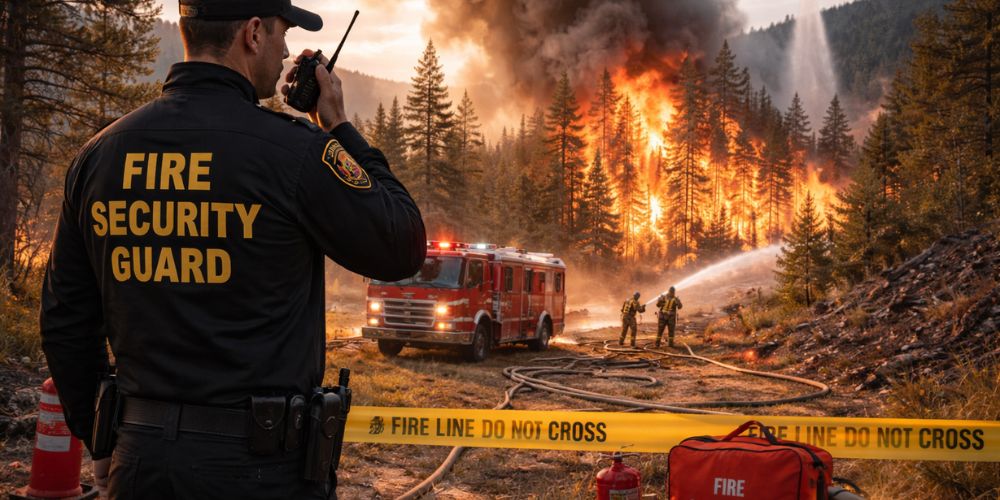
High-rise buildings create fire risks that standard prevention simply cannot address on its own. Smoke moves fast in vertical structures. Evacuating dozens of floors takes time. When a sprinkler system or fire alarm goes offline, every occupied level above ground becomes a critical exposure with no automatic backup in place.
That is the exact gap a fire watch is designed to fill. Trained personnel deploy on-site to monitor for fire hazards continuously until primary systems return to operation. Hyguard Services Inc provides fire watch coverage for high-rise clients where NFPA compliance and zero procedural gaps are the standard.
This is not optional. Fire watch requirements are written into federal fire codes and carry real consequences when ignored.
When Does a Fire Watch Become Mandatory?
NFPA 25 requires a fire watch when water-based sprinkler systems go out of service for more than 10 hours in a 24-hour period. For fire alarm systems, NFPA 101 cuts that window to four hours. Both thresholds are non-negotiable under current fire codes.
Active construction phases also trigger the requirement. Buildings undergoing welding, cutting, open-flame work while detection systems are active face the same obligation. Frozen lines, burst pipes, scheduled maintenance shutdowns all fall under the same rules. The code requirement applies regardless of how brief the impairment is expected to be. Once the alarm threshold is crossed, the Authority Having Jurisdiction must be notified.
Core Duties During a High-Rise Fire Watch
Patrol Coverage Without Gaps
Fire watch personnel must stay in motion for the full duration of every shift. Each round covers stairwells, mechanical rooms, storage areas, utility corridors, along with all floors impacted by the impairment. Unoccupied spaces receive the same attention as occupied ones.
Rounds run on consistent intervals with no exceptions. NFPA guidelines make no allowance for coverage gaps. A missed round is a compliance violation, full stop.
Logging in Real Time
Every patrol gets documented as it happens. The record captures the time, areas covered, conditions observed. Officers fill the log during the round, not at the end of the shift.
That documentation serves as the property’s legal record. Incomplete logs expose building owners to liability during audits. They also eliminate the primary defense if an incident investigation follows.
Emergency Response Protocols
A fire watch officer needs to know the building before the first shift starts. That means locating every fire alarm pull station, extinguisher, stairwell exit ahead of time. No guessing during an active emergency.
When a fire or smoke condition appears, the sequence is immediate.
For such scenarios, alerting the occupants and contacting the fire department altogether is an inevitable choice. What’s more, a fire safety strategy is dependant on how much calm can the situation conceal during such a chaotic incident. Furthermore, by clearing the fire as they lead the occupants down every floor below is a must to produce a safe exit.
Fire watch officers who have to search for an exit during an active emergency are a liability, not a safeguard.
Who Can Conduct a Fire Watch?
Not every security guard qualifies. Proper fire watch personnel hold documented training in extinguisher operation, NFPA compliance, building-specific evacuation procedures. They study the site layout before their first patrol begins.
Most jurisdictions require that training to be on record. Deploying unqualified personnel does not satisfy the legal fire watch requirement. Building owners who skip that step are legally exposed from the moment the impairment begins.
Common Procedural Failures
Weak shift handoffs create blind spots between rounds. Officers who do not know the site skip critical areas without realizing it. Logs completed after the fact rather than in real time fail audits. Personnel must be fully briefed before each shift begins.
In a high-rise, a brief coverage gap can allow a smoke condition to develop past the point of safe evacuation. The procedures exist because the margin for error in tall buildings is extremely narrow.
Conclusion
A fire watch is a live operational commitment, not a box to check. Property owners, building managers, facility teams all share responsibility for running it correctly at every step. The cost of a poorly run fire watch is measured not just in fines, but in outcomes that cannot be undone.
Hyguard fire watch security delivers certified high-rise fire watch coverage built to NFPA standards, keeping occupants protected until every system is fully back online.