


A construction site can be busy all day, then strangely exposed at night. During working hours, there are crews moving around, deliveries coming in, supervisors checking progress, tools in use, machines running. There’s movement everywhere, which gives the impression that everything is under control.
Then everyone leaves. What remains is fencing, parked equipment, stacked materials, temporary structures, half-finished work and a lot of value sitting still. That shift matters more than many people realise.
Construction sites are not fixed environments. They change daily. Gates open and close. New areas become accessible. Materials arrive unexpectedly. Different subcontractors rotate through. Something secure on Monday can become vulnerable by Thursday without anyone meaning for that to happen.
That is why experienced contractors increasingly treat security as part of the project itself, not an optional extra. Companies such as Hyguard services inc are often brought in for one clear reason: prevention is usually cheaper than disruption. Here are five reasons security guards remain essential on construction sites across California.
1. Theft Does More Damage Than Expected
When people think about site theft, they often picture the value of the stolen item. A generator. Copper wire. Power tools. Fuel.
That matters, of course. But the bigger cost is often what happens next. If the missing item was needed that morning, work slows down immediately. Crews wait. Replacement orders begin. Schedules get adjusted. Other trades may be delayed because one earlier task could not start.
A relatively small theft can ripple through an entire day. Security guards help reduce that risk simply by being visible. Most opportunistic theft depends on easy access and low chance of interruption. A guarded site changes that equation fast. Sometimes nothing happens precisely because someone was there.
2. Trespassing Becomes A Serious Risk Quickly
People enter construction sites for many reasons. Some are curious. Some are cutting through to save time. Some are looking for scrap materials. Some underestimate the danger.
The reason usually matters less than the result. Active sites contain hazards everywhere. Uneven ground, exposed materials, tools left temporarily in place, machinery, trenches, incomplete stairways, temporary electrical setups.
Someone who does not belong there can be injured in minutes. That creates stress, delays, investigations and possible liability concerns no contractor wants attached to a project.
Security guards help prevent this by controlling access points, challenging unauthorized entry professionally and keeping the boundary of the site meaningful rather than symbolic. In many California areas where developments sit close to neighbourhoods or commercial foot traffic, that boundary matters a lot.
3. The Quiet Hours Need Protection Most
Busy daytime hours are not usually the easiest time to target a site. Night is different. Once crews leave, the project becomes quieter, darker and easier to test. Locks get checked. Fences get pushed. Fuel tanks become tempting. Equipment can be tampered with. Graffiti appears where no one can challenge it.
Then morning comes. Instead of starting work, managers deal with damage reports, police calls, insurance questions, replacement orders, delayed crews.
Anyone who has lost half a day before 8 a.m. understands how expensive that can be. Security guards working evenings or overnight help stop many of those problems before they begin. Patrols, visibility and immediate response make a quiet site far less appealing to the wrong person.
4. Safety Improves In Practical Ways
Security guards are not replacing dedicated safety personnel. Still, their presence often strengthens safety in ways that are very real.
They notice unsecured gates. They report fencing damage. They flag suspicious movement near hazardous zones. They keep unauthorized visitors away from dangerous areas. They may spot conditions after hours that no one saw during a rushed end of day shutdown.
These things sound small until one is missed. Construction sites already ask enough from trained workers. Extra avoidable risk helps no one. Good operations usually rely on layers. Procedures, supervision, training, awareness. Security becomes another useful layer.
5. Order At The Entrance Helps The Whole Site
A surprising amount of daily friction starts at the gate. Unexpected visitors arrive. Deliveries need direction. Vendors ask where to unload. New workers are unsure where to check in. Vehicles queue in the wrong place.
None of this sounds dramatic. Yet repeated across weeks, it wastes time and creates tension.
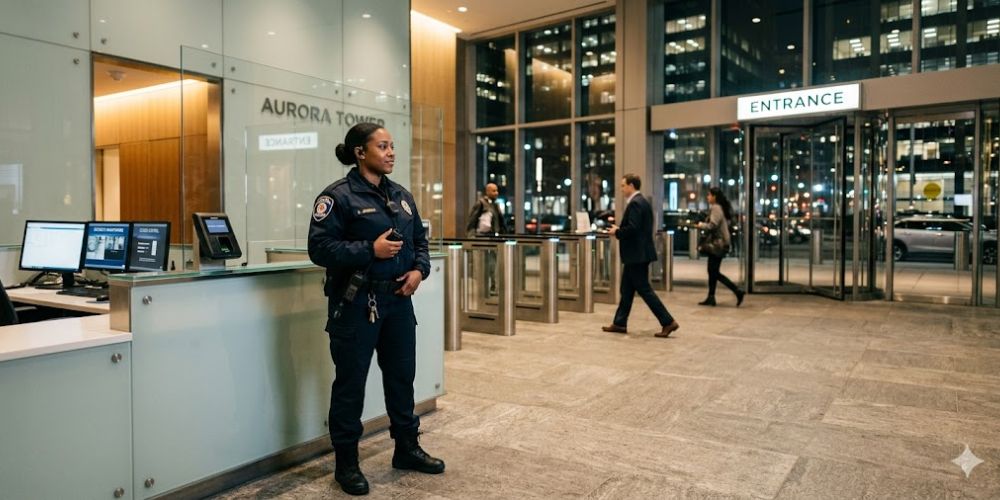
Security guards often become the first point of structure each day. They verify access, direct traffic, log arrivals, communicate concerns and help the entrance feel managed. That organised start tends to carry inward. When the front end of a project runs smoothly, the rest often follows more easily.
Why California Sites Need Strong Coverage
California projects face a wide range of conditions. Dense urban jobsites may deal with constant public traffic nearby. Remote developments may sit isolated after hours. Rebuild zones can attract interest because of material demand. Large commercial projects may store expensive machinery for extended periods.
Different location, same reality. An unattended site is easier to exploit than an attended one. Cameras and fencing help. They are useful tools. They do not replace trained people making decisions in real time.
Bottom Line
Construction delays rarely arrive one at a time. A theft becomes a missed schedule. Trespassing becomes a liability. Overnight vandalism loses momentum for an entire crew.
Security guards help prevent those chain reactions early. They protect materials, control access, support safety, secure after-hours operations and bring calm structure to changing environments. For contractors needing dependable site protection, professional unarmed security services often provide the practical presence that keeps projects moving forward.